
TV Wall Mounting and Cable Concealment in Cape Town
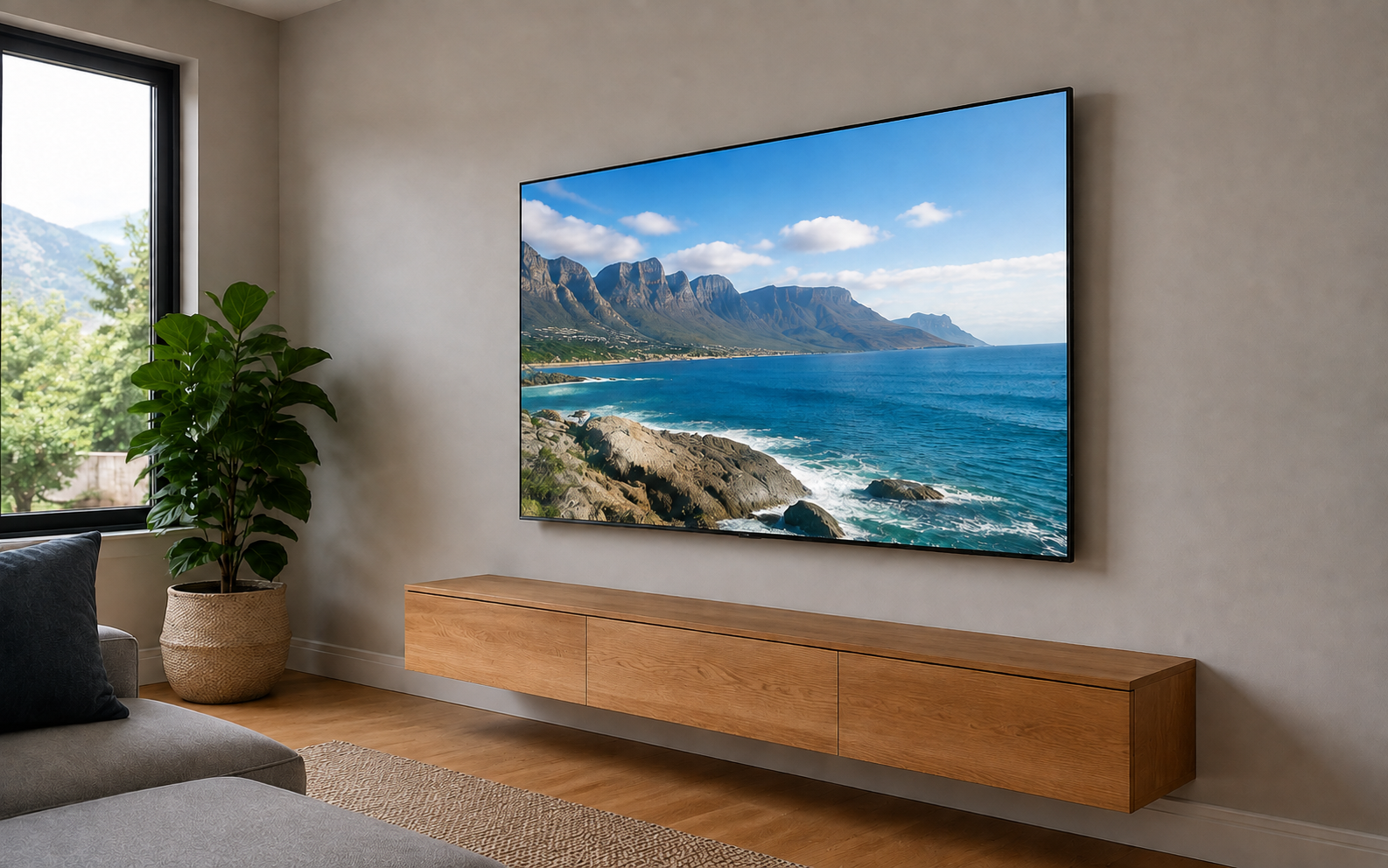
Mount your television securely at a comfortable viewing height while keeping decoder, HDMI and device cables neatly managed. DStv Connect provides TV wall mounting and cable concealment across Cape Town and surrounding areas.
Request a TV Wall Mounting Quote
Fill in the form below and our team will contact you about your TV wall mounting and cable concealment requirements.
TV Wall Mounting Installers in Cape Town
Wall mounting can position your television at a suitable viewing height, free up floor space and create a cleaner entertainment area. A secure installation requires more than attaching a bracket to the wall. The television, bracket, wall construction and selected position must all be compatible.
DStv Connect mounts televisions in lounges, bedrooms, entertainment rooms, offices, restaurants, reception areas and other residential or commercial spaces. The service can include bracket installation, television positioning, cable management and connection of compatible entertainment devices.
Cape Town properties have a wide range of wall types. Established homes commonly have brick or concrete walls, while apartments, newer developments and office interiors may use drywall or partition walls. Each surface requires suitable fixings and a mounting method appropriate for the television’s size and weight.
The proposed position is assessed before drilling begins. Wall strength, mounting height, nearby power, cable routes and the location of connected devices are considered so that the television can be mounted safely and used comfortably.
Secure TV Mounting for Different Rooms
The ideal television position depends on how the room is used. A screen in a lounge is usually viewed from seated furniture, while a television in a bedroom, restaurant or reception area may need a different height and viewing angle.
Mounting a television too high can make extended viewing uncomfortable. Positioning it too low may create an obstructed view or place the screen within easy reach of children and pets. The size of the television and distance from the main seating area also influence the final position.
Window placement and natural light should be considered because reflections can affect picture visibility. A tilting or full-motion bracket may help where the screen needs to be adjusted to reduce glare or serve more than one viewing position.
Televisions mounted in corners, above furniture or near architectural features may need brackets with additional movement. Not every requested position is automatically suitable. Wall construction, heat exposure, ventilation, viewing comfort and available cable routes must be considered before a television is mounted above a fireplace or in another restricted area.
Larger televisions require brackets and fixings rated for their weight and mounting pattern. Access must also allow the screen to be lifted and positioned without damaging the television, wall or nearby furniture.
Choosing the Correct TV Wall Bracket
Televisions use mounting points on the back of the screen that must align with the selected bracket. The bracket must support the television’s VESA pattern, screen size and weight.
A bracket that is too small, incorrectly rated or incompatible with the mounting pattern should not be used. Existing brackets can be assessed before reuse, while a suitable replacement can be included in the quote where required.
Fixed TV Brackets
A fixed bracket holds the television close to the wall without allowing the screen angle to change. It is suitable when the television can be mounted directly in front of the main viewing position at a comfortable height.
Fixed brackets create a low-profile appearance and have fewer moving components. Enough space must still be available for ventilation, plugs and cables behind the television.
Tilting TV Brackets
A tilting bracket allows the screen to angle slightly upward or downward. It is useful when the television needs to be mounted higher than seated eye level or when adjusting the angle can reduce reflections.
The required tilt range depends on the television position and room layout. Cable connections must have enough space and movement to avoid being crushed when the screen is adjusted.
Full-Motion TV Brackets
A full-motion bracket allows the television to extend, turn and tilt. It can be useful in open-plan rooms, corners and spaces with several viewing positions.
The extending arm creates additional leverage against the wall. Full-motion brackets therefore require careful assessment of the wall, fixings, television weight and intended range of movement.
Drywall and partition walls may require structural support or secure attachment to suitable studs before a full-motion bracket can be installed. A position that supports a fixed bracket may not necessarily be suitable for an extending arm.
Request a TV Wall Mounting Quote
Fill in the form below and our team will contact you about your TV wall mounting and cable concealment requirements.
TV Mounting on Brick, Concrete and Drywall in Cape Town
Brick and solid masonry walls are common in Cape Town homes. These walls can provide a secure mounting surface when the correct drilling method, fixings and bracket are used. The condition of the plaster and underlying masonry must still be considered because the bracket needs to anchor into the structural wall rather than a weak surface layer.
Concrete walls can also support televisions but may require different drill bits and fixings. Care must be taken around concealed electrical wiring, plumbing and other building services before drilling.
Drywall and plasterboard require a different approach. The television cannot simply be attached using standard plastic wall plugs. Suitable studs, structural supports or correctly rated fixings need to be identified according to the television and bracket.
Full-motion brackets require particular care on drywall because extending the television increases the load placed on the wall. If the available structure is unsuitable, another wall position, fixed bracket or additional support may be needed.
Tiled walls, decorative cladding and face-brick surfaces also need careful drilling and positioning. The installation method should avoid unnecessary damage while still creating a secure connection to the supporting structure behind the finish.
Flats and complexes may have rules governing drilling, cable routing and alterations to shared walls. Landlord or body corporate approval should be obtained where required before work begins.
TV Cable Concealment for Cape Town Homes
Visible wires can make a wall-mounted television appear unfinished. Cable concealment keeps the area below and around the screen neater while protecting connections from unnecessary pulling and tangling.
The required cables depend on the entertainment setup. These may include HDMI cables, decoder connections, aerial cables, network cables, optical audio cables, soundbar connections and leads for streaming devices or gaming consoles.
Cable concealment can be completed using surface trunking, existing conduits or suitable in-wall routes. The best method depends on the wall construction, distance to the connected equipment and whether permanent alterations are permitted.
Surface Cable Trunking
Surface trunking provides a neat route for cables without opening the wall. It is often suitable for solid brick and concrete walls, rental properties and installations where extensive wall alterations are not practical.
The trunking can run vertically from the television to a cabinet, decoder or nearby power point. Its size must accommodate the number and thickness of the cables without forcing sharp bends or compressing connectors.
Surface trunking can also make future cable changes easier because the route remains accessible. Paintable trunking may be used where a closer match to the wall finish is desired.
In-Wall Cable Routing
In-wall routing can hide compatible signal and data cables inside a wall cavity or suitable conduit. It can create a cleaner finish where the wall construction and access allow it.
Drywall cavities may provide a direct route between the television and equipment position. Brick and concrete walls may require existing conduits or more involved wall work.
HDMI connectors and other cable ends need sufficient space to pass through the selected route. Cable length should also allow devices to be connected without placing strain on the television ports.
In-wall routing must avoid electrical wiring, plumbing and other concealed services. The proposed route is assessed before openings are made.
Power for a Wall-Mounted Television
A television requires access to a suitable power outlet. A standard television power lead should not simply be placed inside a wall or hidden in an unsuitable enclosed space.
If the existing power point cannot be used safely and a new socket or fixed electrical connection is required, the electrical work must be completed by a registered electrical contractor. This work may need to be arranged and quoted separately from the TV mounting service.
Decoder, Soundbar and Entertainment Device Connections
A wall-mounted television often needs to connect to a DStv decoder, Openview decoder, soundbar, streaming device, gaming console or network point. The location of these devices affects the television position and cable route.
Decoders and consoles can remain on a cabinet below the television, be placed on a suitable shelf or be housed in another practical location. The cables must be long enough for the selected route and compatible with the required picture, sound and network connections.
HDMI cables should be routed without tight bends or excessive tension. Access should also be retained where possible so that devices can be replaced or upgraded without reopening the complete installation.
A soundbar can be mounted below the television where the wall, bracket and soundbar mounting points permit. Its position should complement the screen without obstructing the television sensor or interfering with bracket movement.
Cable management behind the television is also important. Excess cable can be secured so that it does not hang below the screen, press against ventilation openings or pull on connection ports.
Once connected, the television and attached devices are tested to confirm that the picture, sound and selected inputs are working.
Request a TV Wall Mounting Quote
Fill in the form below and our team will contact you about your TV wall mounting and cable concealment requirements.
Multiple TV Mounting for Cape Town Businesses
TV wall mounting is available for offices, boardrooms, reception areas, restaurants, bars, guest houses, waiting rooms and other commercial properties across Cape Town.
Commercial screens may be used for entertainment, live sport, news, presentations, menus or customer information. The mounting height and bracket should be selected according to the room, viewing distance and whether the screen needs to be adjusted.
Restaurants and bars may need several televisions positioned so that customers can see the screens from different areas. Fixed brackets may suit screens facing one section, while tilting or full-motion brackets can provide more flexibility in open viewing areas.
Boardrooms and offices may require connections for laptops, conferencing equipment or streaming devices. Cable routes should be planned around the table, equipment cabinet and available network or power points.
Guest houses and hospitality properties may need televisions installed consistently across several rooms. The wall type, furniture layout and decoder position in each room should be checked rather than assuming that one mounting position will suit the entire property.
Multiple-TV installations are planned around the number of screens, bracket requirements, access and cable concealment needed at each position.
Removing and Replacing Existing TV Brackets
An existing television and bracket may need to be removed during a move, renovation or equipment upgrade. The wall and bracket can be inspected before the new television is installed.
A bracket should only be reused if it is compatible with the new television’s mounting pattern, size and weight. Old, damaged, bent or incorrectly rated brackets should be replaced.
Existing holes may not match the new bracket or desired television position. The wall condition must be checked before new fixings are installed, particularly where previous drilling has weakened the mounting area.
Televisions can also be repositioned when the original installation is too high, off-centre or poorly aligned with the room. Moving the screen may require changes to the cable route, trunking or connected-device position.
Factors Affecting TV Wall Mounting Costs in Cape Town
TV wall mounting prices depend on the television, bracket, wall type and installation requirements. A smaller television mounted on a suitable brick wall with a fixed bracket will generally require less work than a large screen using a full-motion bracket on a more complex surface.
The cost can be affected by whether the bracket is supplied, reused or replaced. Fixed, tilt and full-motion brackets have different hardware and installation requirements.
Wall construction is another factor. Brick, concrete, drywall, tiled surfaces and decorative cladding require different tools, fixings and installation methods.
Mounting height and access can also affect the work. High positions, restricted spaces and oversized televisions may require additional handling.
Cable concealment costs depend on the number of cables, distance to the equipment, wall construction and whether surface trunking or an in-wall route is required. Soundbar mounting, device connections, old bracket removal and multiple televisions may also affect the quote.
Details about the television size, bracket, wall type, required position and cable-concealment preference help determine what the installation will involve.
Request a TV Wall Mounting Quote
Fill in the form below and our team will contact you about your TV wall mounting and cable concealment requirements.
TV Wall Mounting and Cable Concealment Across Cape Town
Professional TV wall mounting and cable concealment services are available for homes, apartments, offices, guest houses and other properties throughout Cape Town and surrounding areas. Fixed, tilting and full-motion brackets can be installed on suitable walls, with neat cable management for televisions and connected equipment.
- City Bowl and Atlantic Seaboard: Cape Town City Centre, Gardens, Vredehoek, Woodstock, Salt River, Sea Point, Green Point, Camps Bay and Hout Bay.
- Southern Suburbs: Observatory, Pinelands, Mowbray, Rondebosch, Newlands, Claremont, Kenilworth, Wynberg, Constantia, Plumstead, Diep River, Bergvliet and Tokai.
- Cape Flats and eastern areas: Athlone, Crawford, Bonteheuwel, Manenberg, Hanover Park, Grassy Park, Langa, Gugulethu, Nyanga, Philippi, Mitchells Plain, Khayelitsha, Delft, Belhar, Blue Downs, Eerste River, Mfuleni and Macassar.
- Northern Suburbs: Goodwood, Parow, Bellville, Durbanville, Brackenfell, Kraaifontein, Kuils River, Edgemead, Bothasig, Monte Vista, Plattekloof, Panorama and Fisantekraal.
- West Coast: Milnerton, Century City, Table View, Parklands, Bloubergstrand, Sunningdale, Dunoon, Melkbosstrand and Atlantis.
- South Peninsula: Muizenberg, Fish Hoek, Noordhoek, Kommetjie, Ocean View, Simon’s Town and Kalk Bay.
- Helderberg, Cape Winelands and surrounding towns: Somerset West, Strand, Gordon’s Bay, Grabouw, Stellenbosch, Kayamandi, Paarl, Mbekweni, Wellington, Franschhoek, Klapmuts, Malmesbury and Darling.
Request TV Wall Mounting and Cable Concealment
Get your television securely positioned with a suitable bracket and neatly managed connections. Request a quote for TV wall mounting and cable concealment in Cape Town and surrounding areas.
Request a TV Wall Mounting Quote
Fill in the form below and our team will contact you about your TV wall mounting and cable concealment requirements.