
Communal and Commercial DStv Installation in Cape Town
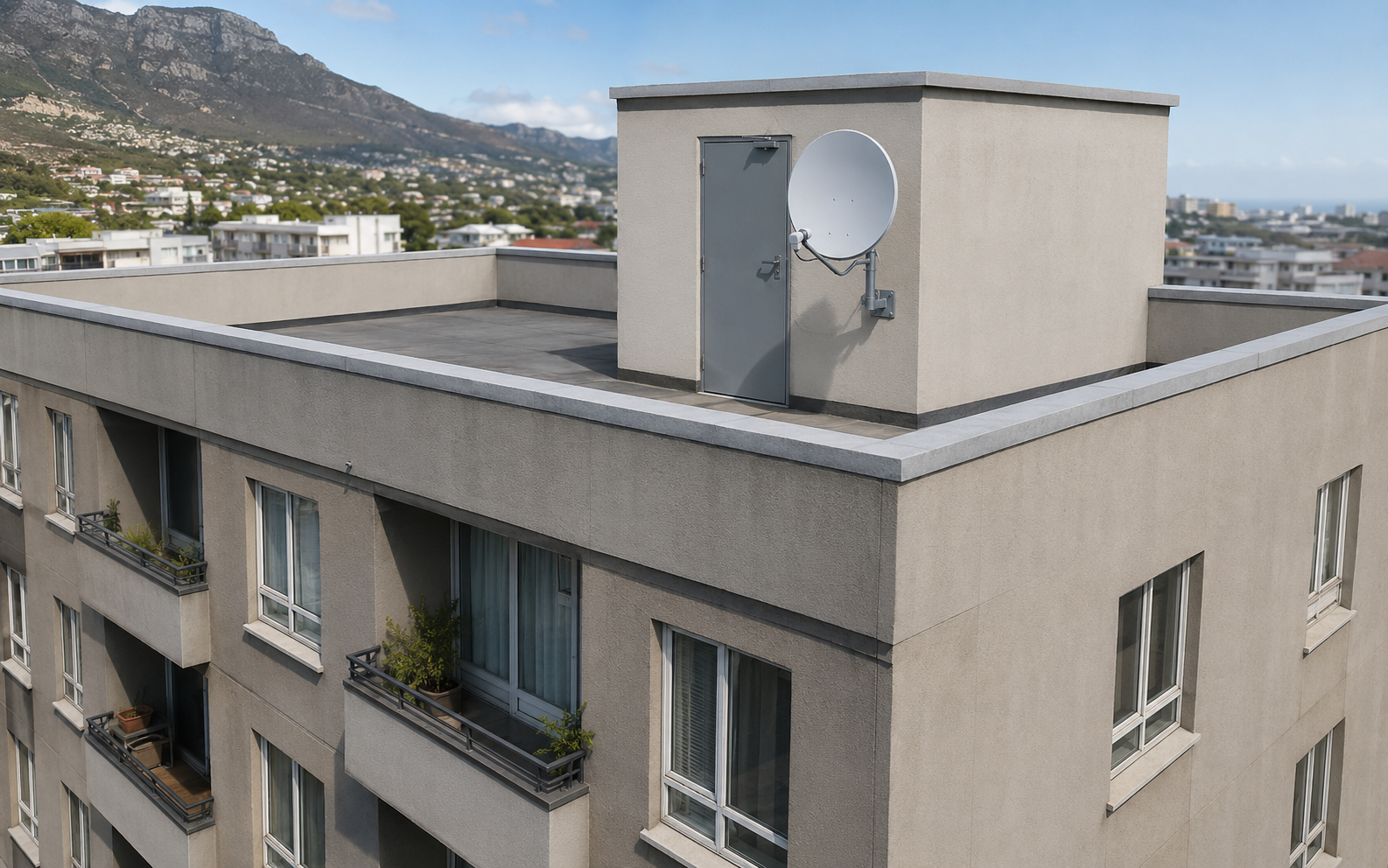
DStv Connect installs shared satellite systems and commercial DStv distribution for complexes, hospitality properties, businesses and multi-unit buildings across Cape Town and surrounding areas.
Request a Communal or Commercial DStv Quote
Fill in the form below and our team will contact you about your communal or commercial DStv installation.
Communal and Commercial DStv Installers in Cape Town
Communal and commercial DStv systems distribute satellite television to multiple units, rooms or screens from centrally installed equipment. They are suitable for properties that need more than a standard household installation and require careful planning around the number of users, viewing requirements and building layout.
A communal system can provide satellite signal to apartments, townhouses or other individual units from shared equipment. Commercial installations can distribute DStv to hotel rooms, guest areas, offices, restaurants, bars, waiting rooms and other business spaces.
DStv Connect assists with new installations, extensions, equipment upgrades, additional viewing points and signal faults affecting shared systems. Each installation is planned according to the number of units or televisions, existing infrastructure, decoder requirements and available cable routes.
Cape Town properties range from apartment buildings with restricted roof access to large hospitality venues and residential developments. The installation must account for building-management requirements, exterior appearance, cable distances, access to service areas and the condition of existing satellite infrastructure.
Shared DStv Systems for Apartment Blocks and Complexes
A communal DStv installation allows several units to receive satellite signal from shared equipment. Instead of mounting an individual satellite dish for every apartment or townhouse, a central dish and distribution system can serve multiple properties.
This arrangement can reduce dish clutter on roofs, balconies and exterior walls. It also creates a central point from which the shared equipment can be inspected, maintained and upgraded.
Communal satellite systems are suitable for apartment blocks, townhouse complexes, residential estates, retirement villages, student accommodation, mixed-use buildings and other multi-dwelling properties. New systems can be designed for current requirements while allowing for additional units or compatible decoder configurations where the building infrastructure permits.
Residents ordinarily use their own compatible DStv decoders and manage their own subscriptions. The communal system provides access to the satellite signal but does not automatically create one shared household subscription for everyone in the building.
Compatibility must be considered before a decoder is connected. An older communal system may not support all current DStv decoder models or viewing configurations without changes to the distribution equipment.
How a Communal Satellite System Works
A communal system begins with a correctly mounted and aligned satellite dish. The satellite signal is received through the LNB and passed into central distribution equipment before being carried through the building to the required outlets.
Multiswitches and other suitable distribution components can direct the required satellite feeds to different units. The equipment used depends on the number of connections, decoder types, cable distances and whether residents require Single View, Explora or compatible XtraView configurations.
Satellite signals cannot always be divided using ordinary television splitters. The distribution system needs to provide the correct signal path for the connected decoder. Incorrect components or poorly planned cabling can cause missing channels, intermittent reception, decoder communication problems and signal errors in one or several units.
Cables may run through risers, service ducts, ceiling spaces, conduits or other approved routes. The layout should allow technicians to access important distribution equipment without unnecessarily entering individual units whenever maintenance is required.
The system is tested at the central equipment and selected outlets to confirm that the signal is reaching the intended parts of the building. Testing also helps identify excessive cable losses, damaged connections and outlets that may need attention.
Request a Communal or Commercial DStv Quote
Fill in the form below and our team will contact you about your communal or commercial DStv installation.
Commercial DStv Installation for Cape Town Businesses
Commercial DStv installation is suitable for businesses that need television in guest rooms, public spaces, workplaces or customer areas. The system may serve one shared screen, several independent viewing zones or many televisions across a larger property.
The installation requirements depend on how the business intends to use DStv. A small office reception with one screen will have different needs from a hotel with television points in every guest room or a restaurant showing several sporting events.
Commercial installations can include satellite dish mounting and alignment, central distribution equipment, cabling, television outlets, decoder connections and testing. Existing infrastructure can be assessed to determine whether it can be reused, extended or upgraded.
The DStv subscription and installation are separate considerations. Businesses need a DStv Business package suited to the type of establishment and how the content will be viewed.
DStv for Hotels, Guest Houses and Accommodation Properties
Hotels, guest houses, bed and breakfasts, lodges, retirement properties, clinics and hospitals can use a DStv Stay package for guest or in-room viewing.
The distribution system may need to serve bedrooms, suites, lounges, reception areas, dining areas and other shared spaces. The required setup depends on the number of rooms, channel arrangement and whether each television needs independent control.
Smaller guest houses may use several decoders connected to selected rooms, while larger accommodation properties may require centralised equipment and a structured distribution network. The system should be designed so that faults can be isolated without unnecessarily interrupting viewing throughout the property.
Existing hospitality installations can also be inspected when rooms have missing channels, inconsistent picture quality or outlets that no longer work.
DStv for Restaurants, Bars and Public Viewing Areas
Restaurants, bars, pubs, taverns, shops, entertainment venues and other public viewing spaces can use a suitable DStv Play package.
The installation may need to distribute one decoder output to several screens or provide different viewing zones for simultaneous events. Screen positions, decoder locations and cable distances should be considered before equipment is installed.
A restaurant may want the same programme displayed throughout the venue, while a sports bar may need separate screens showing different channels. These arrangements require different numbers of decoders and a distribution system designed for the intended viewing layout.
Centralising the decoders and distribution equipment can help keep customer areas free from unnecessary cabling and make channel management more practical for staff.
Request a Communal or Commercial DStv Quote
Fill in the form below and our team will contact you about your communal or commercial DStv installation.
DStv for Offices, Schools and Waiting Areas
DStv Work packages are intended for offices, corporate environments, schools, universities, government offices, banks, reception areas and similar workplaces.
These installations may provide news, business information or entertainment in receptions, boardrooms, waiting rooms, staff areas and customer service spaces. A single television may only require a straightforward commercial connection, while larger premises may need distribution to several floors or departments.
The equipment and cable routes can be planned around the layout of the workplace so that screens are connected without disrupting important access areas or creating unnecessary visible cabling.
Multi-TV and Multi-Unit DStv Distribution
A multi-TV system can distribute content to several televisions, but the viewing arrangement must be established before the system is designed.
Several televisions can share one decoder output when they are intended to display the same channel. This may work for a reception area, restaurant or communal lounge where the same programme needs to appear on every screen.
Different channels require separate decoder outputs or another suitable commercial configuration. Hotels, guest houses and sports venues may need several decoders to provide a choice of channels across rooms or viewing zones.
Multi-unit residential buildings require a satellite feed that supports compatible decoders in individual apartments. Each resident may need control over their own viewing and subscription, making the requirements different from a restaurant displaying one decoder across several televisions.
The number of units, decoders and screens determines the required central equipment. Cable distance and the size of the property also influence whether amplification or additional distribution stages are needed.
Planning the complete system before installation helps prevent insufficient outputs, overloaded equipment and cable layouts that are difficult to extend later.
New Communal Systems and Upgrades Across Cape Town
Communal DStv systems can be installed during construction or added to an existing building. Early planning is particularly useful for new apartment developments, renovations and hospitality projects because conduits, equipment areas and outlet positions can be included before walls and ceilings are completed.
A new installation begins with the property layout, number of units and expected viewing requirements. The proposed dish position must have a suitable satellite line of sight and provide practical access for installation and future maintenance.
Existing communal systems may need to be extended when additional units, guest rooms or televisions are added. The current dish, LNB, multiswitches, power supplies, amplifiers, cables and outlets should be checked before new equipment is connected.
Older systems may have been designed for decoder technology that is no longer commonly used. Upgrading the central equipment can make the distribution network suitable for supported modern decoders, but the existing cables and building layout will determine what changes are practical.
Cape Town buildings may also have restrictions governing dish positions, roof access and exterior cable routes. Approval from the body corporate, property owner, building manager or relevant project team should be obtained where required before installation work begins.
Request a Communal or Commercial DStv Quote
Fill in the form below and our team will contact you about your communal or commercial DStv installation.
Communal DStv Repairs in Cape Town
A problem affecting several units often points to a fault in the shared part of the system. This can include the dish alignment, LNB, central cabling, multiswitches, amplifiers, power supplies or distribution connections.
If only one unit or television is affected, the problem may be located at the individual cable, outlet, connector or decoder connection. Comparing signal readings at different points helps determine whether the fault is isolated or system-wide.
Common communal DStv problems include missing signal in selected units, channels disappearing across the building, intermittent reception, damaged distribution equipment and outlets that no longer provide a usable signal.
Cape Town’s wind, rain and coastal conditions can contribute to movement, corrosion and water damage in exposed equipment. Exterior cables, connectors, dishes and mounting hardware should be inspected when a shared system develops recurring reception problems.
DStv Connect tests the satellite and distribution signal to locate installation faults. Damaged cabling, connectors and suitable distribution components can be replaced where required. Decoder hardware faults are not repaired, but the connection can be tested to determine whether the problem lies within the shared installation or at the decoder.
Planning DStv for New Developments and Renovations
Communal satellite infrastructure should be considered while a new development or major renovation is still being planned. This allows suitable cable routes, risers, conduits, outlets and equipment spaces to be incorporated into the building.
The expected number of apartments, rooms or commercial screens helps determine the capacity required. Allowance can also be made for future connections so that the property is not limited to the minimum number of outlets needed at the time of construction.
Equipment should be positioned where it can be reached for maintenance while remaining protected from unauthorised access and environmental exposure. Central distribution points also require access to a suitable power supply where powered equipment is used.
For an existing building, a site assessment can identify available conduits, unused outlets and equipment that may still be serviceable. Reusing suitable infrastructure can reduce unnecessary disruption, but damaged or incompatible components should not be retained simply because they are already installed.
Factors Affecting Communal and Commercial DStv Installation Costs
Communal and commercial DStv installation costs depend on the size and complexity of the required system. A small business with a few televisions requires less infrastructure than an apartment block, hotel or large entertainment venue.
The number of units, rooms, televisions and required channels affects the amount of equipment and cabling needed. A system distributing the same decoder output to several screens will differ from one providing independent viewing across multiple rooms.
Property access also affects the quote. Roof height, service ducts, concrete walls, ceiling access, cable distances and existing conduits can make installation more or less complex.
The condition of existing infrastructure is another important factor. A property with suitable cabling and functional outlets may require fewer changes than a building with damaged cables, ageing distribution equipment or an unsupported system.
Other considerations include the dish and LNB requirements, central distribution equipment, number of outlets, signal amplification, decoder connections and whether the work forms part of a new development or an occupied property.
A site assessment provides the information needed to determine the equipment, labour and cable routes required for the installation.
Request a Communal or Commercial DStv Quote
Fill in the form below and our team will contact you about your communal or commercial DStv installation.
Communal and Commercial DStv Installation Across Cape Town
Communal and commercial DStv installation services are available for apartment buildings, residential complexes, offices, guest houses, hospitals, schools and other multi-unit properties throughout Cape Town and surrounding areas.
- City Bowl and Atlantic Seaboard: Cape Town City Centre, Gardens, Vredehoek, Woodstock, Salt River, Sea Point, Green Point, Camps Bay and Hout Bay.
- Southern Suburbs: Observatory, Pinelands, Mowbray, Rondebosch, Newlands, Claremont, Kenilworth, Wynberg, Constantia, Plumstead, Diep River, Bergvliet and Tokai.
- Cape Flats and eastern areas: Athlone, Crawford, Bonteheuwel, Manenberg, Hanover Park, Grassy Park, Langa, Gugulethu, Nyanga, Philippi, Mitchells Plain, Khayelitsha, Delft, Belhar, Blue Downs, Eerste River, Mfuleni and Macassar.
- Northern Suburbs: Goodwood, Parow, Bellville, Durbanville, Brackenfell, Kraaifontein, Kuils River, Edgemead, Bothasig, Monte Vista, Plattekloof, Panorama and Fisantekraal.
- West Coast: Milnerton, Century City, Table View, Parklands, Bloubergstrand, Sunningdale, Dunoon, Melkbosstrand and Atlantis.
- South Peninsula: Muizenberg, Fish Hoek, Noordhoek, Kommetjie, Ocean View, Simon’s Town and Kalk Bay.
- Helderberg, Cape Winelands and surrounding towns: Somerset West, Strand, Gordon’s Bay, Grabouw, Stellenbosch, Kayamandi, Paarl, Mbekweni, Wellington, Franschhoek, Klapmuts, Malmesbury and Darling.
Request Communal or Commercial DStv Installation in Cape Town
Plan a shared satellite system for an apartment block, complex, hospitality property, restaurant, office or other multi-TV environment. Request a quote for communal or commercial DStv installation in Cape Town and surrounding areas.
Request a Communal or Commercial DStv Quote
Fill in the form below and our team will contact you about your communal or commercial DStv installation.